Your Grocery Bill
Diesel Hit a Record. Farmers Pay First — You Pay Next.
Diesel hit a record $6.53 a gallon right at harvest. What it costs the farmers growing your food — and why it lands on your grocery receipt.
By Ivan · 4 min read · September 27, 2026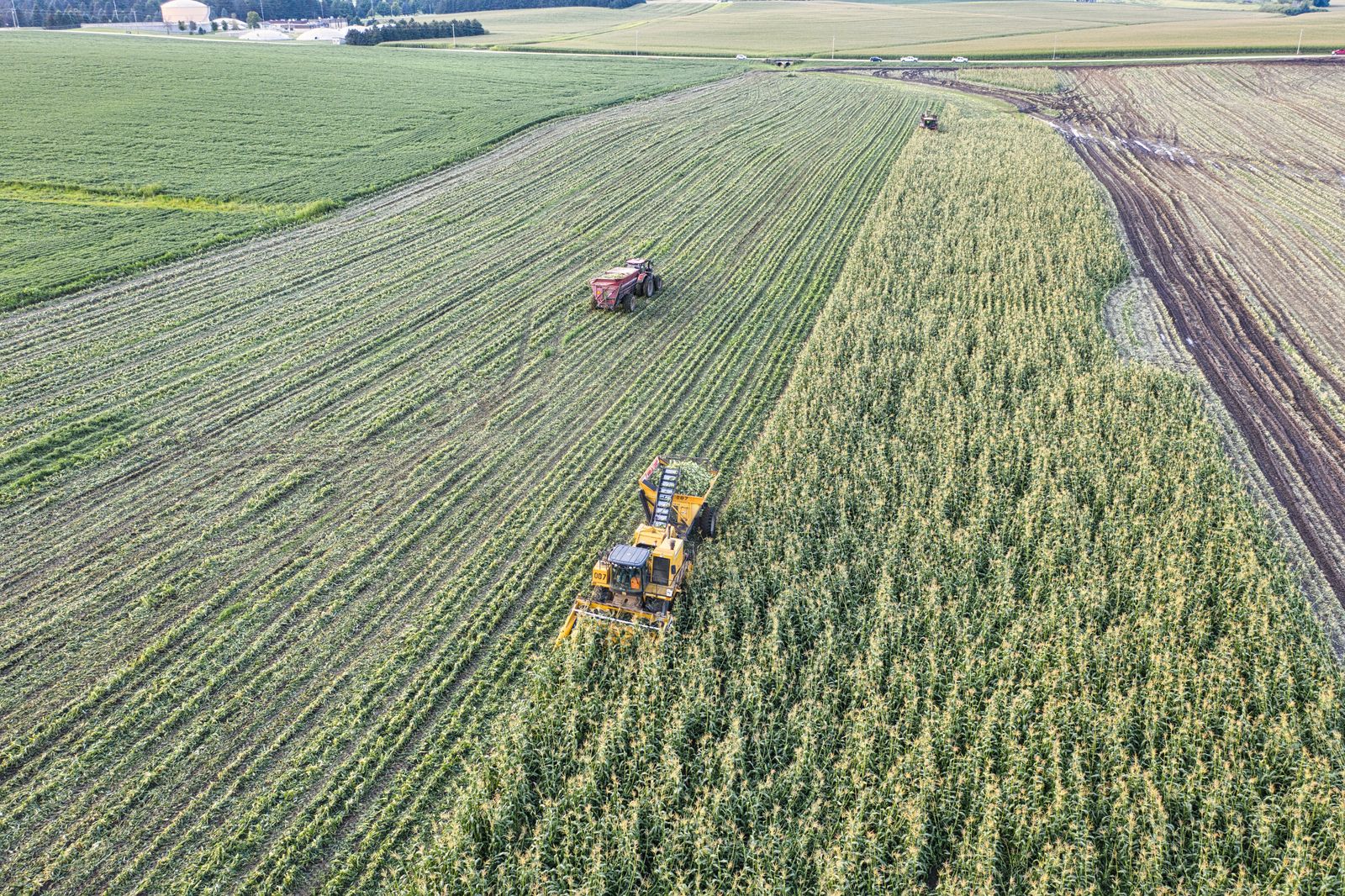
Diesel hit $6.53 a gallon last week — the highest price since the government started tracking it in 1994. It landed right at harvest, when farms burn more diesel than at any other time of year.
That means farmers are fueling this year's harvest at the highest diesel price ever recorded. And diesel doesn't stop at the farm. It runs most of the trucks between a field and a grocery store, so the cost keeps moving until it lands on a receipt. Yours included.
The record
Diesel averaged $6.53 a gallon nationally for the week of September 21, according to the U.S. Energy Information Administration — the highest since the agency started tracking in 1994. Five weeks earlier it was $5.45. That's about a dollar a gallon, nearly 20 percent, in a little over a month. The previous record was $5.72, set in June 2022. On California's coast, drivers are seeing more than $8.
Why it's happening
Three things are squeezing supply at once. First, the world has less diesel to go around: Russia banned diesel exports in July, and Middle East exports have roughly halved from a year ago. Second, U.S. refineries can't make up the difference — they're running at 97 percent of capacity with inventories 13 percent below normal, and the margin refiners take on each gallon is at a record. Third, the United States ships about one in four barrels of the diesel it refines overseas, even with domestic prices at records — and harvest itself adds about 4 percent more farm fuel demand in September and October.
Less diesel in the world, no spare capacity to refine more, and a quarter of domestic output leaving the country. Put those together and you get a record.
Who profits
Record prices don't just hurt — they pay. Refiners are taking a record margin on every gallon while the farmers buying that diesel watch their income fall. That's where the money goes, and it deserves a closer look.
The exports are a policy choice, too. Washington could restrict diesel shipments abroad during a domestic record. It hasn't — no export limits have been enacted — so one in four barrels keeps leaving the country while American farmers pay the highest diesel price ever recorded. That's a decision, and it's fair to ask who it serves.
What it costs to farm right now
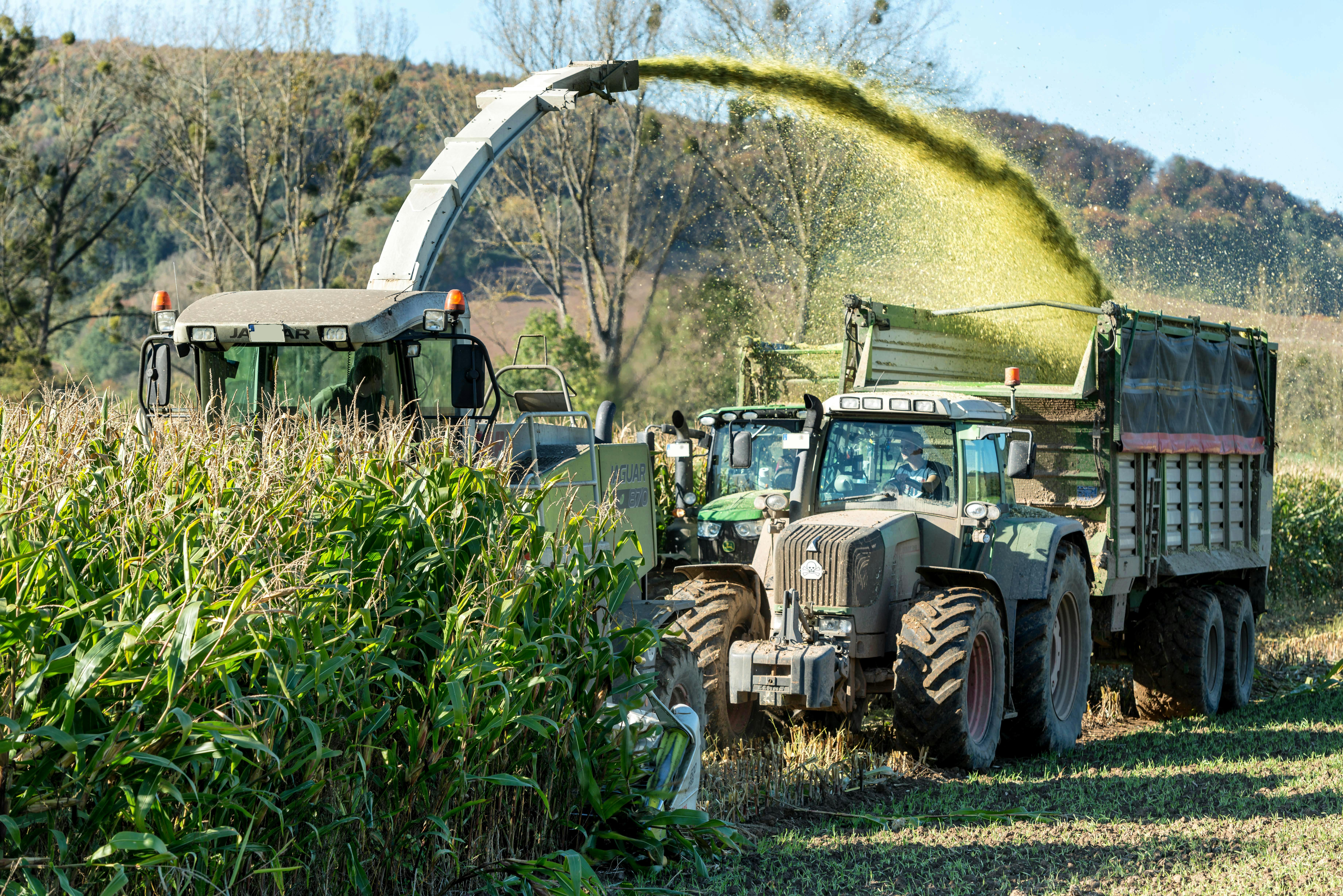
Diesel isn't a side expense on a farm. It's tractors, combines, grain dryers, and the trucks hauling grain to the elevator. A typical corn harvest burns five to eight gallons of diesel per acre. University of Missouri extension figures put a fuel-intensive corn operation at about $33 an acre in fuel, up from about $22. Purdue economists estimate $11 more per acre for corn and $7 more for soybeans than last year. USDA forecasts total farm fuel and oil spending up nearly 29 percent this year — while net farm income, adjusted for inflation, is expected to fall 5.5 percent.
Costs up, income down.
How it reaches your groceries
But diesel doesn't only run farms. It runs freight. Diesel trucks move about 73 percent of America's cargo, and when diesel jumps, trucking rates follow — producer prices for diesel fuel rose 24 percent in August alone. Everything that rides a truck carries the surcharge, which is most of what you buy.
Hauling corn and soybean meal now costs five to seven cents more per bushel, and economists expect that to reach shelves in about 45 days. Wholesale turkey is forecast above $1.74 a pound for the holidays, versus about $1.35 last year. Shipping produce out of California costs 40 to 120 percent more than a year ago; apple and pear freight rates in Washington's Yakima Valley are at a four-year high.
A 20 percent diesel spike doesn't mean 20 percent higher groceries — farming, trucking, refrigeration, and storage are only slices of the retail price. But every slice got more expensive, and they stack. The surcharge leaves the farm on a truck and doesn't stop until the checkout line.
Shorten the chain
Here's what we believe at Blue Dot Farms: shorter, more direct food chains leave more of your dollar with the producer.
Every mile of diesel-burning freight between a field and your table is a place where fuel prices take their cut. Buying directly from local producers — at a farm stand, a farmers market, or straight from the farm — can cut links out of that chain. It won't fix global diesel markets, and local doesn't automatically mean fewer miles or a lower price. But it can mean more of your dollar reaches the person who grew your food instead of feeding the fuel surcharge.
The record will break eventually. Until then, here's one thing worth doing this week: pick one item you already buy every week — eggs, milk, ground beef — and buy it directly from a producer near you. Use the Blue Dot Farms directory to find one, and ask them how delivery works. One item, one farm, this week.
Sources
Take the next step
Join the movement →